Lakewood Ranch Chimney Repair & Gas Fireplace

14405 Arbor Green Trail, Lakewood Ranch, FL



Lakewood Ranch Chimney Repair & Gas Fireplace
14405 Arbor Green Trail, Lakewood Ranch, FL
A fireplace that will not light, shuts off during use, leaks after rain, smells damp or sends smoke into the room needs more than a quick guess. Lakewood Ranch Chimney & Gas Fireplace diagnoses the complete system from the firebox and controls to the vent termination or chimney above the roof. We service gas, wood-burning, masonry, factory-built and direct-vent systems throughout Lakewood Ranch, including 34202 and 34211. Call (941) 337-3231 to discuss the problem and schedule service.
Lakewood Ranch is not one uniform housing market. Established neighborhoods in 34202 include older masonry and factory-built fireplaces, while newer villages east of Lorraine Road in 34211 contain a higher concentration of direct-vent gas fireplaces, framed chimney chases and modern control systems. The visible symptom may look the same, but the repair path changes with the appliance, fuel, venting method and construction around it.
We start by identifying what is actually installed. A gas log set placed inside a masonry fireplace uses the chimney differently from a sealed direct-vent unit. A factory-built wood fireplace depends on listed metal flue components and clearances that should not be repaired like site-built masonry. Correct identification prevents unnecessary parts, incompatible repairs and repeated service calls.
A no-start condition can begin with the pilot, igniter, thermocouple, thermopile, receiver, wall switch, remote, control module, gas valve or fuel supply. Replacing the first part that appears suspicious often wastes money. The correct approach is to confirm the control sequence and test the components involved in that sequence.
A pilot that drops out may have a weak flame, dirty pilot opening, poor sensor contact, failing thermocouple or thermopile, loose connection, draft disturbance or safety-circuit problem. On sealed systems, glass condition and venting can also affect operation. The symptom alone does not prove which part failed.
Intermittent shutdowns can be caused by a weak safety signal, overheating, restricted vent termination, control failure or an unstable gas supply. We check how the unit behaves from ignition through warm operation because a fireplace that starts normally may still fail after temperatures rise.
Flame appearance can change because of burner contamination, incorrect media or log placement, blocked burner ports, air-shutter settings, fuel configuration or venting. Soot and unusual odor should not be covered with fragrance or treated as a cosmetic problem. The burner, fuel and airflow need to be evaluated together.
Fresh batteries do not rule out a control issue. A remote system may involve a handheld transmitter, receiver, wiring harness, wall switch, module and valve connection. We determine whether the failure is in the command, the receiver or the fireplace itself before proposing a new remote assembly.
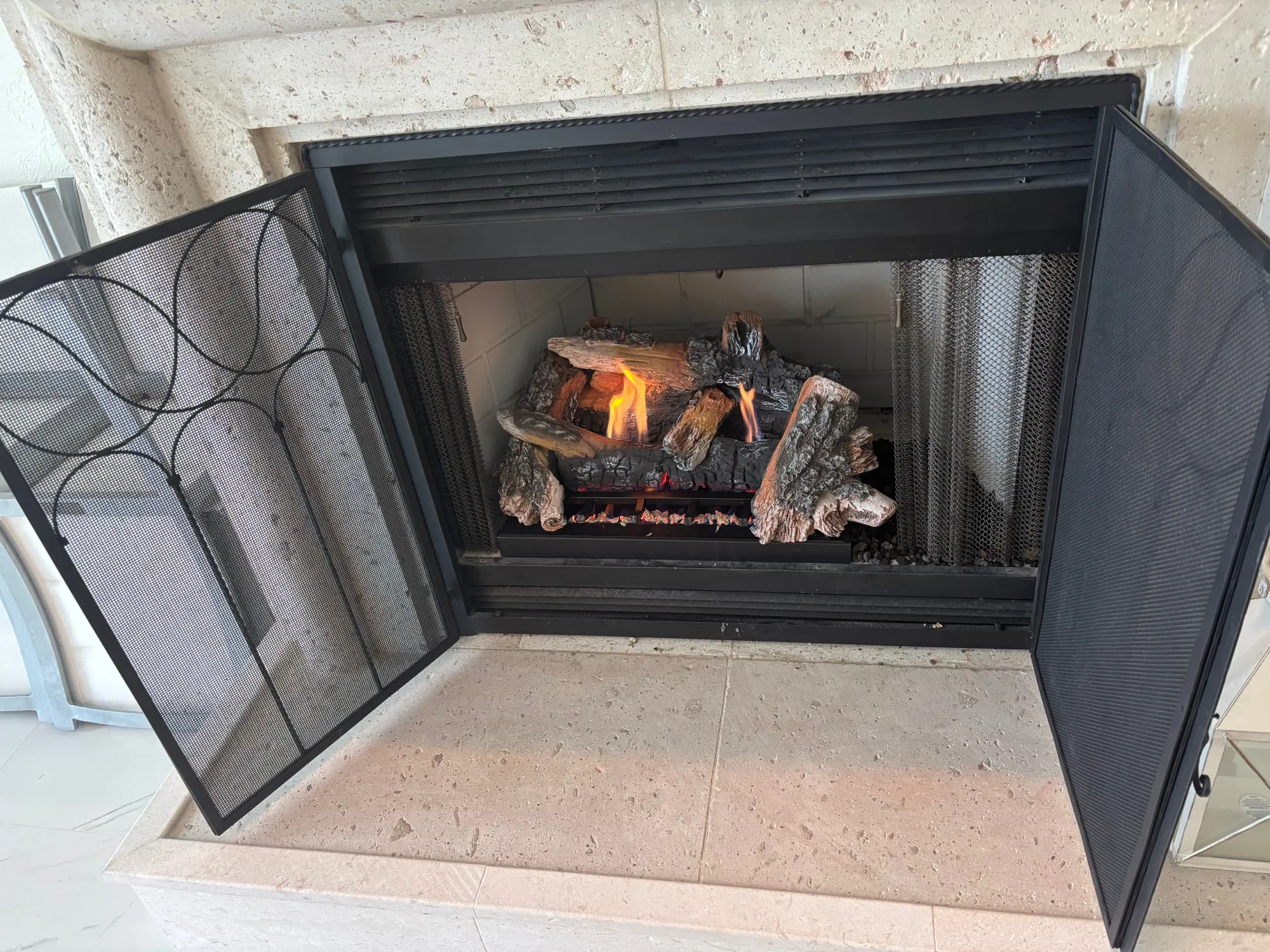
Our gas fireplace repair service covers natural-gas and propane systems, including direct-vent fireplaces, gas inserts, vented gas logs and vent-free appliances where the existing installation and manufacturer allow them. We diagnose the system before recommending a replacement component.
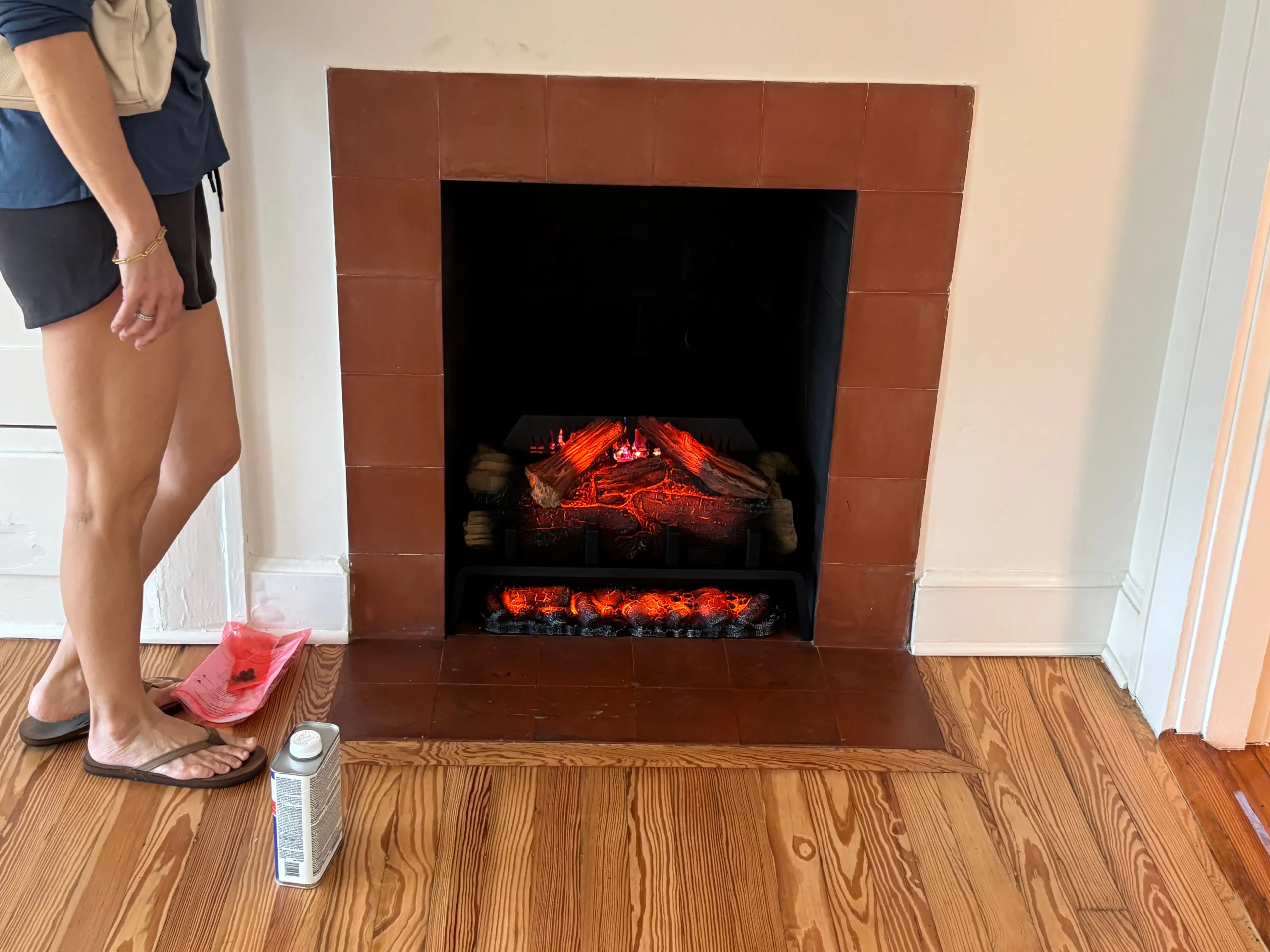
Summer storms can expose a small roofline failure that stays hidden during lighter rain. Our chimney leak repair process follows the likely path of water through the cap, crown, chase cover, storm collar, flashing, masonry or exterior finish. We avoid treating every leak as a sealant problem because water may enter in one place and become visible several feet away.
Lakewood Ranch is inland compared with Siesta Key or Longboat Key, so salt exposure is generally lower. Local chimneys still face intense sun, humidity, wind-driven rain and long periods without use. Metal expands and contracts, sealant separates, flat chase covers hold water and small openings around collars or fasteners can feed moisture into a framed chase.
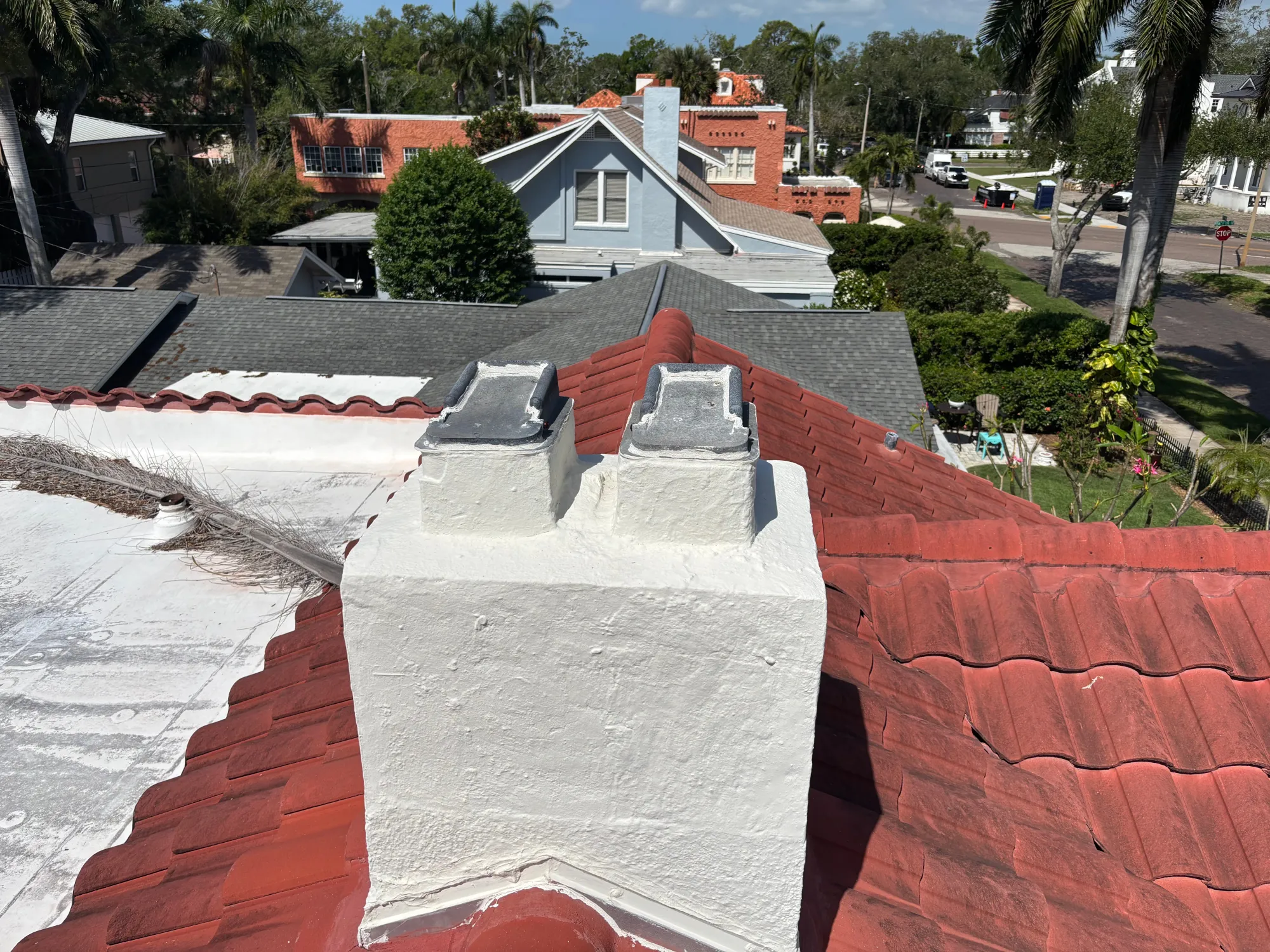
A lasting repair depends on the failed component. A corroded or poorly pitched cover may require a properly formed replacement. A damaged crown may need restoration rather than another surface coat. Visit our chimney cap, crown and chase cover service page for the differences between these roofline components.
Direct-vent units use sealed glass and a dedicated vent that brings combustion air in and sends exhaust out. Common concerns include ignition failure, shutdowns, control problems, dirty burners, damaged glass seals and blocked or weathered exterior terminations. Service and parts must match the manufacturer and model.
A factory-built fireplace is a listed system that includes the firebox, metal chimney and required clearances. A framed chase often surrounds the chimney above the roof. Rusted chase covers, failed storm collars, damaged caps and water entry are common exterior concerns. Repairs must preserve the system's listed components and clearances.
Some homes use a gas log set inside a fireplace originally built for wood. The burner, valve and controls are only part of the system; the damper, smoke chamber, flue and cap above still affect operation. When adding or replacing gas logs, the firebox dimensions, fuel, venting and approved installation must be confirmed. For new burners, log sets or approved conversions, review our gas fireplace installation and gas log service. Gas-line installation or modification must be coordinated with the appropriate qualified trade.
Masonry systems may develop crown cracks, worn mortar joints, damper corrosion, liner damage or draft changes. Cleaning alone does not correct structural or water-entry problems. The firebox, smoke path and exterior chimney should be evaluated as one connected system.
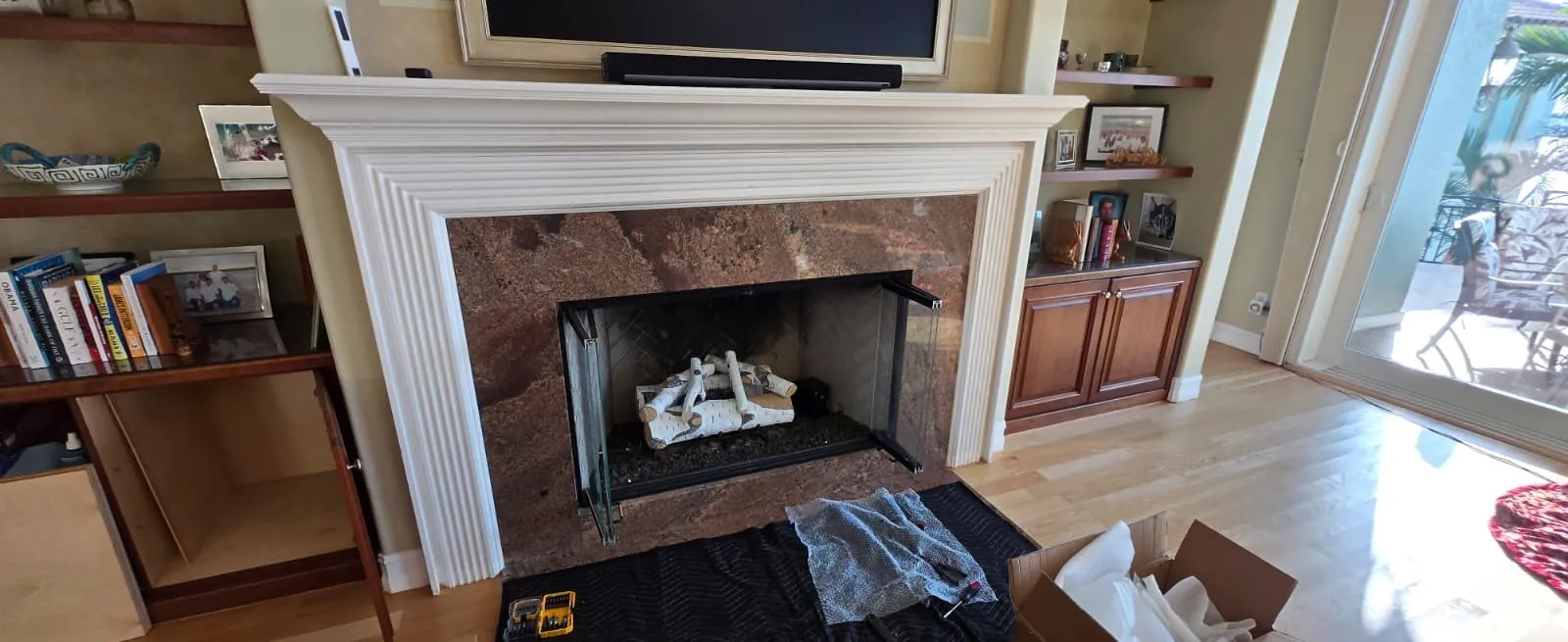
A useful estimate depends on what is failing, not only on the symptom. A pilot cleaning and control diagnosis are different from a valve replacement. A chimney cap is different from a custom chase cover, crown rebuild or liner repair. Roof height, pitch, access, manufacturer parts, fuel type and hidden water damage can also change the labor and materials required.
Photos and model information help prepare for the visit, but they cannot confirm gas pressure, electrical signal, venting behavior or the path of a concealed leak. The most reliable price follows an inspection that identifies the system and the actual failure point.
Common service corridors include Lakewood Ranch Boulevard, University Parkway, State Road 70, State Road 64, Lorraine Road, Uihlein Road and the communities east of I-75.
Lakewood Ranch spans parts of Manatee and Sarasota counties, so the mailing city or ZIP code may vary even within the broader community. If the property falls outside this page’s coverage, view all service locations or call to confirm availability.
The same team that services Lakewood Ranch also covers the surrounding Manatee County communities — including Bradenton, Palmetto, Ellenton, Parrish and the greater Sarasota–Bradenton area. Fireplace and chimney systems here face the same intense sun, humidity and wind-driven rain, whether the home sits inland in Lakewood Ranch or closer to the water.
Closer to the barrier islands or the bay? See our Bradenton Beach, Sarasota — St. Armands and Osprey pages, or view all service locations.
Common service corridors include Lakewood Ranch Boulevard, University Parkway, State Road 70, State Road 64, Lorraine Road, Uihlein Road and the communities east of I-75.
Lakewood Ranch spans parts of Manatee and Sarasota counties, so the mailing city or ZIP code may vary even within the broader community. If the property falls outside this page’s coverage, view all service locations or call to confirm availability.
Lakewood Ranch Chimney & Gas Fireplace TOP
14405 Arbor Green Trail, Lakewood Ranch, FL 34202
The problem may be the transmitter, batteries, receiver, wall switch, wiring, control module or the fireplace's ignition system. We separate the command problem from the appliance problem before recommending parts.
Trusted gas fireplace and chimney service across the Suncoast — the same team, wherever you are.
Lakewood Ranch Chimney Repair & Gas Fireplace
14405 Arbor Green Trail, Lakewood Ranch, FL
Sun–Fri — 24 hours
Saturday — Closed
© 2026 Lakewood Ranch Chimney Repair & Gas Fireplace